Bitaxe Gamma vs GT 801: Which Home Bitcoin Miner Should You Buy?
Both are open-source Bitaxe miners built around Bitmain's BM1370 chip, and both can win a full Bitcoin block if luck strikes. The real difference is how much hashrate you get for each dollar and each watt. Here is the honest math.
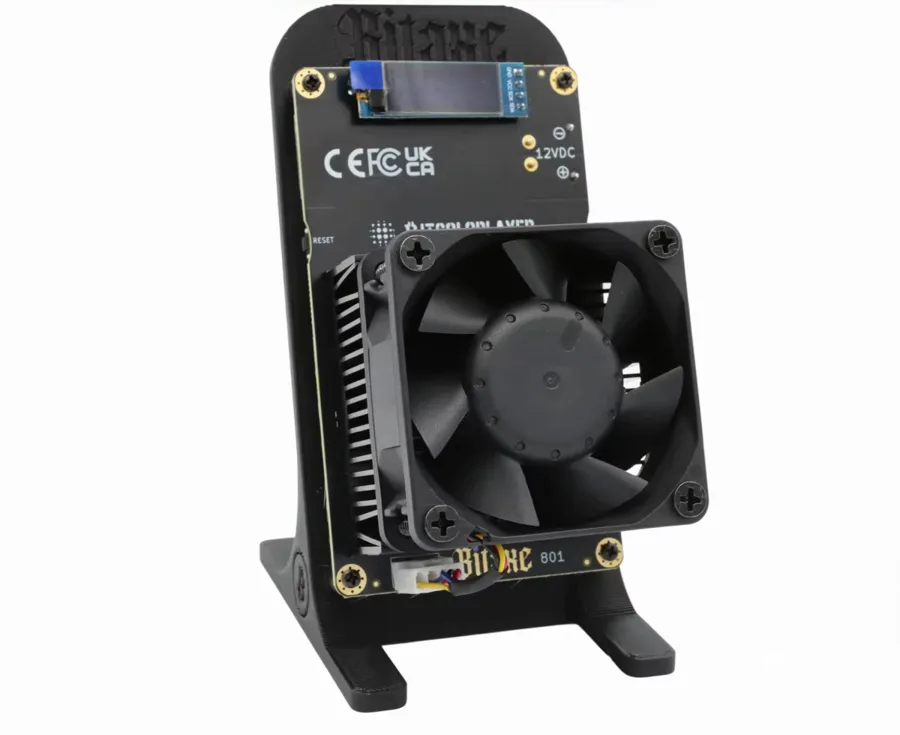
The quick answer
If this is your first miner, get the Bitaxe Gamma. It is cheaper, sips about 18 W, and runs from a simple 5 V supply.
Pick the GT 801 if you want more hashrate in one box and you are fine with a 12 V XT30 power supply and a louder fan.
Specs side by side
- Bitaxe Gamma: about 1.2 TH/s at roughly 18 W, one BM1370 chip, 5 V input.
- Bitaxe GT 801: about 2.15 TH/s at roughly 43 W, two BM1370 chips, 12 V XT30 input.
- Price checked in November 2026: about $41 for a Gamma and about $93 for a GT 801 with power supply.
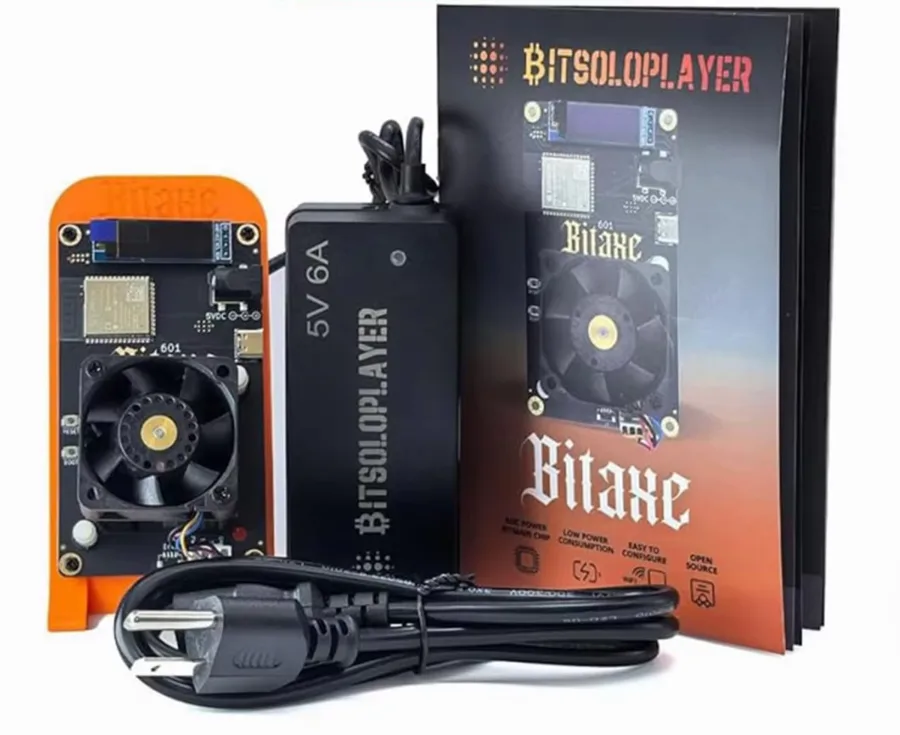 Bitaxe Gamma1.2 TH/s · ~18 W · 5 V≈$41Check today's price →Bitaxe GT 8012.15 TH/s · ~43 W · 12 V≈$93Check today's price →
Price per TH/s
The Gamma costs roughly $34 per TH/s, while the GT 801 lands near $43 per TH/s. Two Gammas give you 2.4 TH/s for about $82, which is more hashrate than one GT for less money.
The trade-off: two boxes, two power supplies and two devices to manage instead of one.
Power and electricity cost
At the average US home rate of about 15 cents per kWh, a Gamma costs roughly $1.95 a month to run. A GT 801 costs about $4.65 a month.
In pool mining, neither one fully pays for its own electricity at that price. They become break-even or better on cheap or solar power.
Solo-mining odds
With the network near 1,000 EH/s, a Gamma has roughly a 1 in 15,900 chance of finding a block in a year. A GT 801 improves that to about 1 in 8,800.
Tiny odds, but small home miners have found real blocks worth more than $230,000 at today's prices. That lottery ticket is why many people run them.
Our pick
Start with one Bitaxe Gamma. If you enjoy it, add a second Gamma or step up to a GT 801. Run your own numbers in the calculator before you buy.
Profit, power cost and solo odds in 10 seconds.